
The Cobra Effect: why smart people pay for the wrong thing
Why paying for results so often backfires: Delhi's cobras, Hanoi's rat catchers, a bank's fake accounts, and the question that catches it in ten seconds.
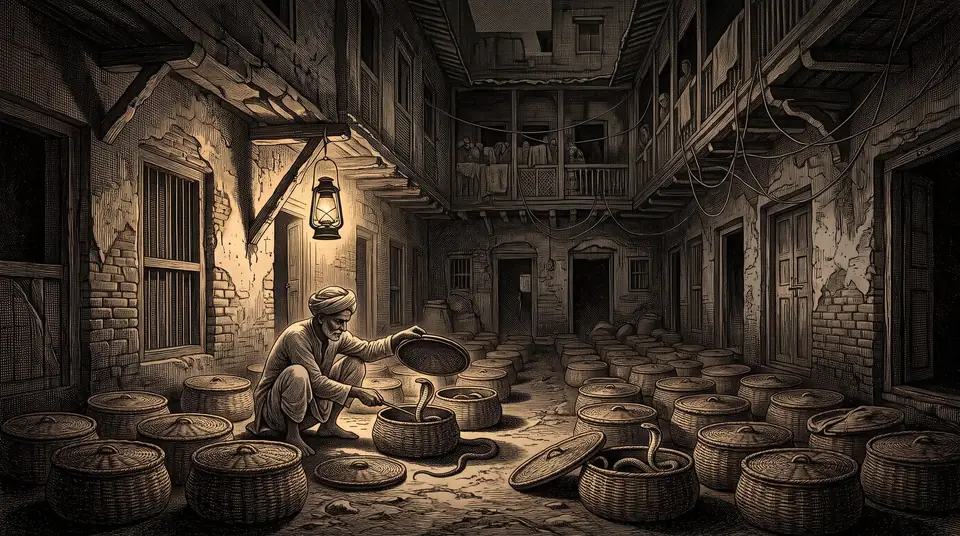
There’s a story economists love to tell. Under British rule, Delhi had a cobra problem, so the government paid a bounty for every dead cobra. A few years later the city had more cobras than when it started.
The plan didn’t fail, exactly. It did what it was built to do, and that turned out to be the problem.
Most of us run some version of it every week, at work with targets and bonuses, and at home with school marks and screen-time deals. Every reward is a small bounty, and a badly designed one pays people to grow the very thing you wanted gone.
There’s a question that catches it before it happens, and it takes about ten seconds to ask. We’ll get there. First, the snakes.
The reward that worked too well
The deal was simple: bring in a dead cobra, collect your cash. At first the pile of dead snakes grew and every report looked like progress. Oddly, though, the streets didn’t seem to have any fewer cobras.
Out behind their houses, people had stopped hunting and started farming. Raising cobras in baskets was far easier than catching wild ones. For a while, a cobra farm behind the house was one of the best little businesses in Delhi.
When officials worked it out, they scrapped the bounty overnight. The farmers did the obvious thing with snakes nobody would pay for. They let them go.
A few thousand kilometres east, another city ran almost exactly the same experiment, and every step of it was written down.
Hanoi, 1902: guess what the rats were missing
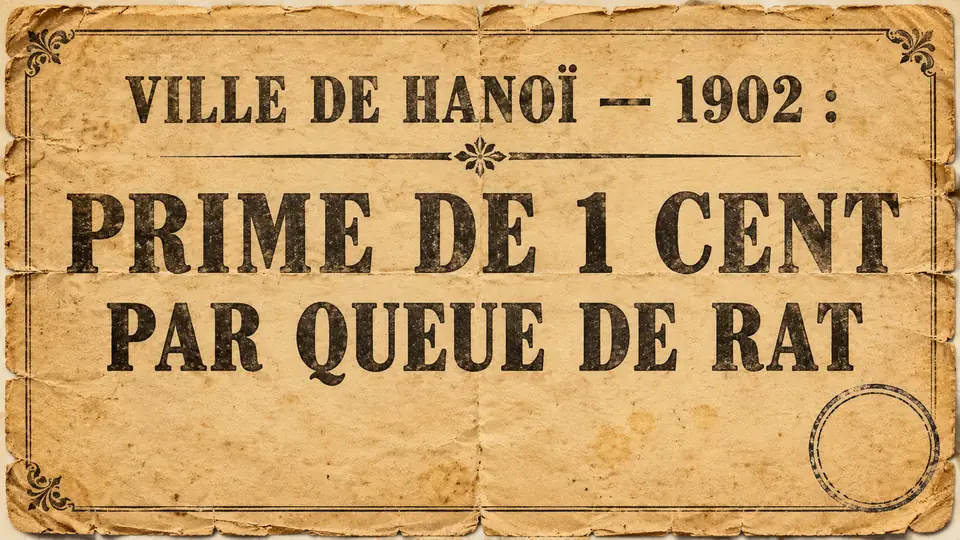
In 1902, the French officials running Hanoi were terrified of plague. Their shiny new sewers had become a highway for rats, so they offered one cent per rat killed. To keep the paperwork simple, you didn’t hand in the rat. Just the tail.
The tails poured in, more than 20,000 on a single day in June. Then people began to notice something odd in the streets. Take a guess before you open it.
What was in the streets?
Rats. Healthy, very much alive, and missing their tails.
Once you see it, the logic is hard to argue with. A dead rat paid you once. A live rat without a tail went on having babies, and every baby grew a tail worth a cent.
So people caught rats, snipped off the tails and let them go. Later there were reports of rats being bred on the edge of the city, which makes it Hanoi’s own farm behind the house.
The bounty was dropped, and plague reached Hanoi the next year anyway.
What strikes us is that nobody in this story was stupid. The officials were educated men facing a real danger, and the rat catchers were ordinary people answering an offer sensibly. So how does paying for dead rats produce more live ones?
The trap inside every number
A restaurant that judges its kitchen by clean plates gets a fair signal for a while. Clean plates usually mean good food. Then the kitchen works out that smaller portions get the same result. The plates come back spotless, and the customers go home hungry.
That’s the cobra effect. You want something that’s hard to see, like fewer snakes, a healthier city or happy customers. So you pay for something easy to count instead: dead snakes, rat tails, clean plates.
For a while, the two move together. Then somebody finds a cheaper way to push up the count than to deliver the real thing. From that day on, you’re paying for the count.
Economists call it Goodhart’s law, and it’s usually quoted like this: “When a measure becomes a target, it ceases to be a good measure.”
None of this means counting is bad. A number works fine as long as the cheapest way to raise it is to do the real work. You’d expect a big, professionally run company to catch this the moment it started. One of America’s largest banks watched it happen for fourteen years.
The bank that knew for fourteen years

Wells Fargo wanted every customer to hold eight of its products, from checking accounts to credit cards, and gave branch staff sales targets to match. The staff hit them. They opened accounts nobody had asked for, up to 3.5 million of them, and forged signatures to do it. It was our cobra farm in a suit.
So the bank did what most of us would do and fired the people involved, about 5,300 of them. It changed nothing, because they weren’t the cause. Senior managers had known since 2002, and the targets stayed until 2016, when regulators stepped in.
In 2020 the bank paid $3 billion to settle. Everyone involved was smart, and that was part of the problem. Smart people are very, very good at hitting the number they’re given.
You don’t even need cheaters

This next one surprised us most, because nobody in it bends a single rule.
In 1989, Mexico City tried to clean its air by keeping every car off the road one weekday a week, depending on its number plate. Fewer cars, cleaner air. It sounds too obvious to fail, but guess what many families did.
What did families do?
Many bought a second car for the day the first one was banned, often an old, cheap one that polluted more.
When the economist Lucas Davis studied the results, he found no sign the air had improved. Yet nobody cheated. Every family made a sensible choice under the rule it was given, and that’s what makes the cobra effect so hard to spot from the inside.
Sometimes a rule doesn’t even need a shortcut to backfire. In Haifa, a fine for late parents managed it all on its own.
How to spot a farm before anyone builds it
Before you reward any number, ask one question: and then what? Then ask it again, and once more after that.
It sounds too simple, so let’s run it on something close to home. Say you pay your child for every book they finish, because you’d love them to grow up a reader.
And then what? They read more books. Lovely. The first answer is always the one you were hoping for, and it’s where Delhi, Hanoi and Wells Fargo all stopped asking.
And then what? Now ask what the cheapest way to earn the money is. The thinnest books, the biggest print, skimming to the last page. The count climbs and the reading doesn’t, and there’s your farm behind the house.
And then what? When the payments stop, does the reading stop too? Have they learned to love books, or that reading is a chore they do for pay?
You don’t have to scrap the reward. Asking showed you what to fix: make the cheapest way to earn it the thing you actually wanted. Pay per book only after a five-minute chat about what happened in it, and the cheapest way to earn becomes actually reading.
The same move works at work and with money. A help desk paid for closing tickets will close them, solved or not, so pay for tickets that stay closed. Judge your savings by last quarter’s returns and you’ll chase last quarter’s winners, so judge them by what they’ll be worth the day you need them.
Built that way, paying for results can work brilliantly. One American glass company proved it with windshields.
Try it on one target you’ve set, for your team, your kids or yourself. Ask what the laziest way to hit it would be. If the answer makes you a little uncomfortable, you’ve found a cobra farm before anyone built it.
Some bounties aren’t yours to change. Your employer, your bank and your government set plenty of them, and the warning signs usually show long before the damage. Spotting them early is what the Brain Primer letter is for.
Sources
- The Delhi bounty is a famous anecdote, made well known by the economist Horst Siebert’s book Der Kobra-Effekt (2001). No record of it has been found: an archive search by the Friends of Snakes Society, “The Cobra Effect: Colonial Misinformation Masquerading as Economic Theory” (2025), traced real snake bounties to Madras in the 1870s.
- Michael G. Vann, “Of Rats, Rice, and Race: The Great Hanoi Rat Massacre, an Episode in French Colonial History”, French Colonial History 4 (2003), pp. 191–203.
- US Department of Justice, “Wells Fargo agrees to pay $3 billion to resolve criminal and civil investigations into sales practices”, 21 February 2020.
- Wells Fargo & Company, “Wells Fargo reports completion of expanded third-party review of retail banking accounts”, 31 August 2017.
- Marilyn Strathern, “‘Improving ratings’: audit in the British University system”, European Review 5, no. 3 (1997), pp. 305–321, after Charles Goodhart (1975).
- Lucas W. Davis, “The Effect of Driving Restrictions on Air Quality in Mexico City”, Journal of Political Economy 116, no. 1 (2008), pp. 38–81.
- The pictures are our own illustrations, not archive images.

Prefer to watch?
Each of our films follows one story like this to the moment it turned.
More from Incentives & Game Theory
Why a bigger bonus can make you worse at your job
Researchers in India offered villagers up to a month's spending to win simple games. What the biggest prize did, and when big rewards help or hurt.
When pay for performance works: the windshield test
One company paid installers per windshield and output rose about 44 percent. Why it worked when bounties, fines and big bonuses backfired.