
When pay for performance works: the windshield test
One company paid installers per windshield and output rose about 44 percent. Why it worked when bounties, fines and big bonuses backfired.
Paying for results has a bad record. A bounty in Delhi bred cobras, a fine in Haifa made parents later, and a big prize in Madurai made players worse.
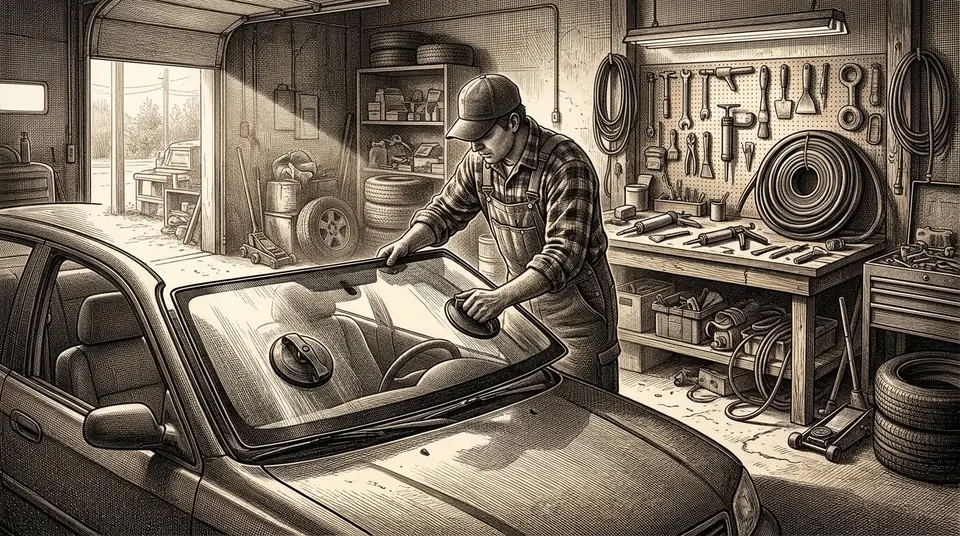
It doesn’t have to go that way. In 1994, the biggest car-glass company in the United States stopped paying its installers by the hour and started paying them by the windshield. Output per worker rose by about 44 percent.
Same kind of plan, opposite result. The difference comes down to four questions, and you can ask all four about any reward you set, or any reward that’s aimed at you.
Paid by the windshield
Safelite Glass, based in Columbus, Ohio, sent installers out to replace broken car windows. Until January 1994 they were paid by the hour. Over the next year and a half, the company moved them to a piece rate of around 20 dollars for each window fitted.
There was a safety net. Anyone whose piece pay came to less than the old wage, about 11 dollars an hour, got the old wage instead. Nobody could earn less than before. They could only earn more.
The economist Edward Lazear studied the company’s records, covering more than 3,700 installers, and measured what happened. Output per worker rose by about 44 percent, and profits went up too.
About half of the gain came from the same people working faster. The rest came from who stayed and who joined. The fastest installers suddenly had every reason to stay, and good ones had a reason to come.
Why didn’t the installers farm it?
By now you know what to worry about. Pay per window and you’d expect rushed, sloppy work: windshields slapped in to hit the count, a farm behind the garage.
Safelite had seen that coming. Before you open the box, guess how it stopped installers from rushing.
How did Safelite stop rushed jobs?
A windshield that broke went back to the installer who fitted it. He refitted it on his own time, unpaid, and paid the company for the new glass before he got another paying job.
A rushed job now cost the installer more than a careful one. A second rule added the people around him. When a customer reported a fault, the repair went, unpaid, to someone in the same shop, and everyone knew whose mistake it had been.
Fifty rupees and a camera
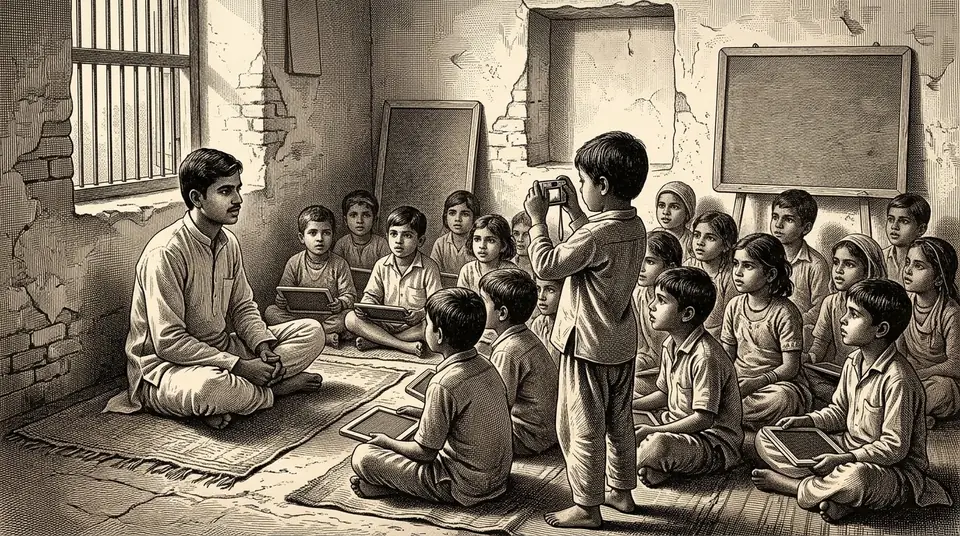
Paying for results doesn’t only work in garages. In the villages around Udaipur, in Rajasthan, the charity Seva Mandir ran small schools with one teacher each. The hardest part of the job was simply turning up: when the study began in 2003, teachers were absent on 44 percent of school days.
So in some schools, picked at random, each teacher got a camera whose date and time stamp couldn’t be changed. A child photographed the teacher with the class at the start of the day and again at the end, at least five hours later.
Each day the photos proved added 50 rupees to the teacher’s pay, and each missing day took 50 away. A month paid anywhere from 500 to 1,300 rupees.
Guess how much difference a camera made.
How often did the teachers show up?
On 79 percent of school days in the camera schools, against 58 percent in schools without them. Children got about 34 more days of lessons a year, and their test scores rose.
The obvious worry was a teacher who came for the photos and taught nothing in between. When the charity’s staff dropped in unannounced, teachers with cameras were just as likely to be teaching as those without.
Four questions that separate Safelite from Delhi
Put Delhi, Haifa and Madurai beside Safelite and Udaipur, and the pattern is hard to miss. Before you pay for a result, ask:
- Is the number the work itself? A fitted windshield is the job, and so is a teacher in front of the class. A rat’s tail is not a dead rat, and a dead cobra is not a city with fewer cobras.
- Does the shortcut cost whoever takes it? At Safelite, a sloppy job came straight back to the installer, unpaid, and in Udaipur a camera that couldn’t be fooled closed the shortcut. In Delhi, the cobra farmers paid nothing for breeding.
- Is money replacing a better reason? Haifa’s parents were on time out of decency, and a small fine bought that out. Fitting glass was always a job, so paying per window replaced nothing.
- Does the task need effort or a clear head? Fitting windshields is skilled but routine, the kind of work where money buys more effort. In Madurai, a month’s spending on one game bought nerves instead.
Safelite and the Udaipur cameras passed all four. Delhi, Haifa and Madurai each failed at least one.
Your turn
Pick one reward you control. It might be a sales target, a bonus, pocket money, or the treat you promise yourself for finishing something. Run it through the four questions.
If it passes, pay generously, because it’ll probably work. If it fails one, fix that part before you raise the stakes. Make the count the real work, and send the cost of a shortcut back to whoever takes it. Protect the reasons people already have, and keep big money away from moments that need a calm head.
Take a sales commission. Paid on every sale, it fails the first question, because a sale that’s returned next month still counts. Pay part of it only on customers who stay, and take it back on returns, and it passes the first two.
Nobody sold for free before, so the third question is no trouble. Spread over many sales instead of riding on one big deal, it passes the fourth as well.
Then turn the questions on the rewards aimed at you. An adviser paid a commission on each product sold fails the first question: the number is the sale, not your money growing. Knowing which question a reward fails tells you exactly what to watch.
Sources
- Edward P. Lazear, “Performance Pay and Productivity”, American Economic Review 90, no. 5 (2000), pp. 1346–1361.
- Esther Duflo, Rema Hanna and Stephen P. Ryan, “Incentives Work: Getting Teachers to Come to School”, American Economic Review 102, no. 4 (2012), pp. 1241–1278.
- The pictures are our own illustrations, not archive images.
This path begins with The Cobra Effect: why smart people pay for the wrong thing.
Prefer to watch?
Each of our films follows one story like this to the moment it turned.
More from Incentives & Game Theory
The Cobra Effect: why smart people pay for the wrong thing
Why paying for results so often backfires: Delhi's cobras, Hanoi's rat catchers, a bank's fake accounts, and the question that catches it in ten seconds.
Why fines backfire: the daycare that made parents later
A daycare fined parents who came late and got more late parents. What a fine, a fee or a payment can quietly switch off, and how to keep it on.
Why a bigger bonus can make you worse at your job
Researchers in India offered villagers up to a month's spending to win simple games. What the biggest prize did, and when big rewards help or hurt.